
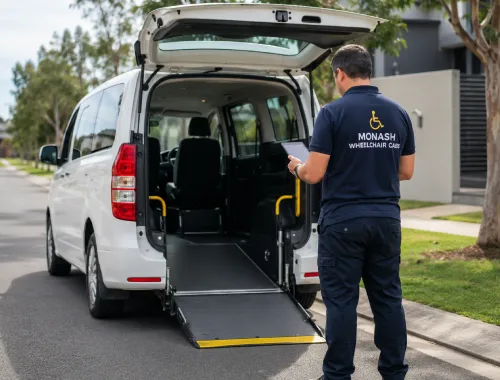
Accessible Booking Details Monash
Accessible Booking Details Monash
The right booking details can turn a stressful travel arrangement into a smoother, clearer, and more comfortable journey.
For wheelchair passengers, carers, families, support workers, and agencies, accessible transport works best when the important information is shared before the vehicle arrives. A clear booking helps the driver understand the passenger’s needs, plan the pickup properly, and reduce avoidable delays.
Around the City of Monash, many accessible trips are arranged for appointments, aged care visits, school travel, family commitments, airport journeys, local errands, and support-related travel. Each trip may have different needs, so clear communication at the start makes a real difference.
Why Booking Details Matter
Accessible travel is personal. Two passengers may both use wheelchairs, but their travel needs can be very different. One passenger may use a manual wheelchair and travel with a family member. Another may use a mobility scooter and need extra time at pickup. Another may be travelling with a support worker to an appointment.
When booking details are clear, the journey becomes easier to arrange. The driver knows where to go, what to expect, how many people are travelling, and whether the passenger needs any extra transport-related support.
Clear accessible booking details Monash passengers can provide also help families and carers feel more confident that the trip has been arranged properly.
Start With the Full Pickup Address
A complete pickup address is one of the most important details. For some locations, a street address is enough. For others, more information may be needed.
If the pickup is from an aged care home, hospital, clinic, school, apartment building, shopping centre, or community facility, it helps to share the exact entrance or meeting point. A large property may have multiple access points, parking areas, reception desks, or pickup zones.
Useful pickup details may include:
- Building name
- Unit or room number
- Main entrance or side entrance
- Reception instructions
- Gate code or access notes
- Whether someone will meet the driver
- Whether the passenger will be waiting inside or outside
These details can save time and help the passenger avoid waiting in the wrong place.
Give a Clear Drop-Off Location
The drop-off point is just as important as the pickup point. A passenger may not simply need to arrive at an address. They may need to be taken to a clinic entrance, aged care reception, school office, hospital department, airport terminal, or a specific building entrance.
Clear drop-off instructions help the driver understand the final destination properly. This is especially helpful for passengers who may have limited mobility, appointment times, or a carer waiting at the other end.
If someone will receive the passenger at the destination, that information should also be shared during booking.
Share the Wheelchair or Mobility Device Type
Wheelchair and mobility device details help confirm a suitable travel arrangement. Manual wheelchairs, electric wheelchairs, mobility scooters, and larger wheelchairs can have different space and access needs.
When making a booking, it is helpful to mention:
- Manual wheelchair
- Electric wheelchair
- Mobility scooter
- Larger wheelchair
- Any unusual size or attachment
- Whether the passenger can transfer, if relevant
- Whether extra time is needed
Monash Wheelchair Cabs can support many wheelchair and scooter users, subject to safe vehicle suitability. Sharing mobility device details early helps the booking team make better arrangements and avoid last-minute confusion.
Confirm the Number of Passengers
Passenger numbers should always be shared clearly. Many wheelchair passengers travel with a carer, family member, support worker, friend, or agency representative.
With one wheelchair, up to six passengers may be able to travel. With two wheelchairs, up to five passengers may be able to travel. The final arrangement depends on the booking details and safe vehicle suitability.
If extra passengers are added at the last minute, the booking may become harder to manage. It is better to share the full passenger count from the beginning.
Mention Carers or Support People
A carer or support person can make the journey easier for the passenger. They may help with communication, comfort, timing, appointment check-in, or handover at the destination.
When booking, mention whether a carer, family member, support worker, or agency staff member will travel with the passenger. It is also helpful to share whether that person will assist at pickup, travel in the vehicle, or meet the passenger at drop-off.
These details help everyone understand their role before the trip begins.
Include the Travel Date and Time Carefully
Correct date and time details are essential, especially for appointments, school runs, aged care travel, and airport trips. When time matters, it is better to plan ahead.
One-day advance booking is preferred where possible. Same-day bookings may be available, subject to availability. For urgent bookings, calling during phone support hours is usually the best option.
If the passenger needs to arrive by a certain time, share the appointment time as well as the preferred pickup time. This gives the booking team more context and helps reduce timing pressure.
Plan Return Trips Early
Many accessible journeys need a return trip. This may include medical appointments, hospital visits, school travel, social outings, shopping, or airport-related travel.
If a return trip is needed, mention it during the first booking conversation. If the exact return time is not known, give an estimated time and explain the situation.
For appointments that may run late, it helps to say whether someone will call when the passenger is ready. This keeps the return arrangement clearer for everyone involved.
Share Payment or Program Information
Some passengers may use MPTP cards, TAC-related bookings, WorkSafe-related bookings, or NDIS transport support arrangements. These details should be discussed during booking so the right information can be prepared.
Every situation can be different, so early communication helps avoid delays. If an agency, support worker, or family member is arranging the booking, they should share the relevant details clearly.
This does not need to be complicated. The goal is simply to make sure the booking team understands what information applies to the trip.
Explain Any Special Transport Requirements
Some passengers may need extra time, clear communication, familiar routines, or support from a carer. These details are helpful and should be shared respectfully.
This may include mobility needs, communication preferences, behavioural considerations, anxiety around travel, or support requirements at pickup and drop-off.
Monash Wheelchair Cabs focuses on transport, not personal care, nursing care, or medical care. Still, transport-related details can help make the journey smoother and more comfortable.
Clear Details Help Everyone
Good booking details help more than the passenger. They also help families, carers, support workers, aged care staff, schools, agencies, and the driver.
When everyone understands the plan, the journey becomes easier to manage. The pickup is clearer. The timing is better. The passenger count is known. The wheelchair type is understood. The return trip is planned. The driver arrives with better information.
This is especially useful across busy Monash areas such as Clayton, Glen Waverley, Mount Waverley, Mulgrave, Oakleigh, Wheelers Hill, Hughesdale, Huntingdale, Notting Hill, Ashwood, and nearby local suburbs.
Book With Clear Information and Confidence
Monash Wheelchair Cabs helps wheelchair passengers, carers, families, and agencies arrange accessible transport across the City of Monash. With experienced drivers, wheelchair-focused booking support, 24/7 advance booking options, and same-day bookings subject to availability, the team makes the process clear and practical.
To arrange a booking, contact Monash Wheelchair Cabs or send the trip details through the website form. Share the pickup, drop-off, wheelchair type, passenger count, timing, return trip, and any support requirements so the journey can be planned with care.